
Articles -
April 2025
On-Site Dilution with Various Water Types: What You Need to Know
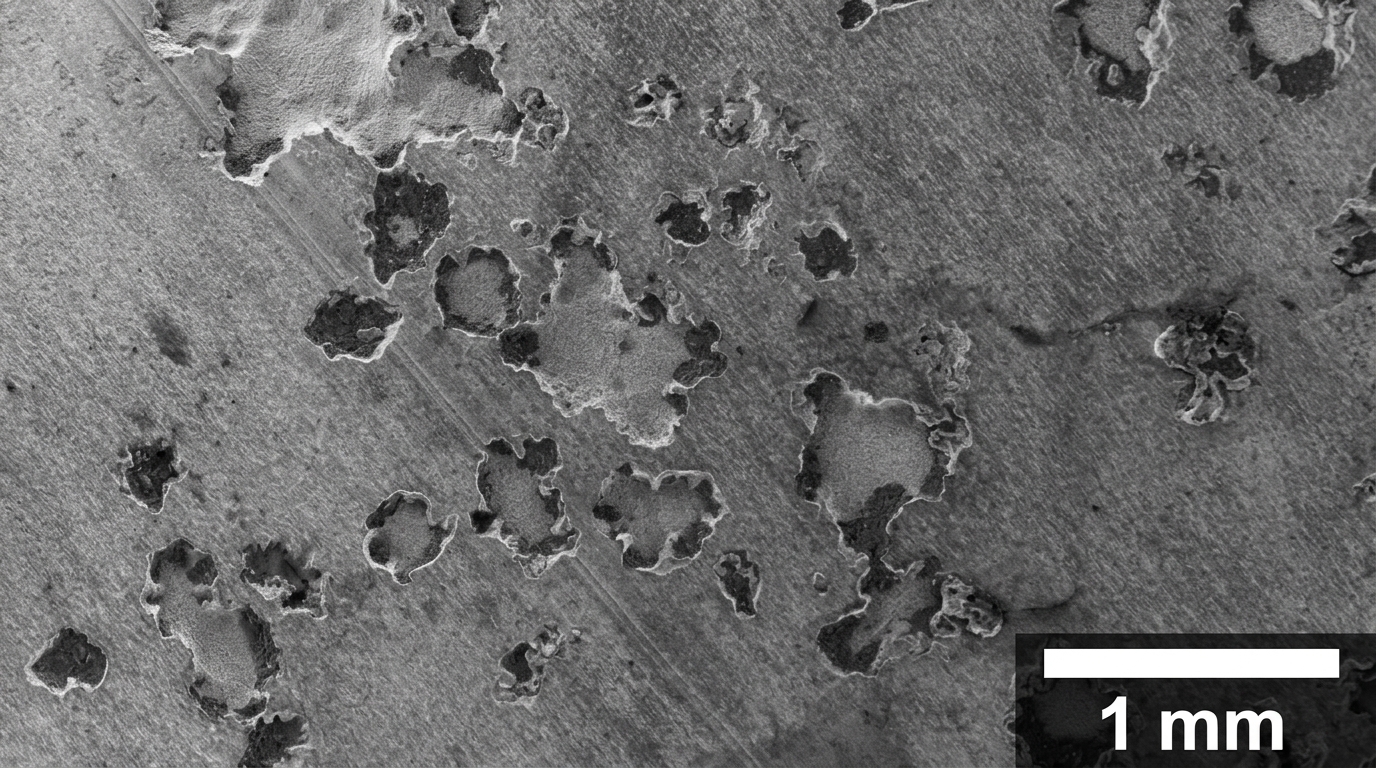
Microscopic (SEM) view of severe pitting corrosion on carbon steel.
When preparing a heat transfer fluid system, on-site dilution of concentrated glycol is a common necessity. However, not all water is created equal. The quality and purity of the water you use to dilute your coolant will significantly impact the lifespan and performance of your system.
Total Dissolved Solids (TDS) must be carefully monitored. High TDS means a higher concentration of dissolved ions (such as chlorides and sulfates), which can cause scaling, localized pitting corrosion, and fouling in pipes, even if you are using corrosion inhibitors. To help you choose the right dilution fluid, here is a comprehensive overview of the five most common water types.
1. Deionized (DI) Water
Highly Recommended. Deionized water is the gold standard for blending with glycol and is preferred by almost all heat transfer fluid manufacturers. The deionization process strips out virtually all dissolved ions, ensuring a very low electrical conductivity (< 5 mS/cm). Using DI water vastly reduces the chances of scaling, fouling, and corrosion. It is absolutely essential for low electrical conductivity applications to prevent shorts or thermal runaways.
2. Distilled Water
Recommended (Higher Cost). Distilled water is produced by boiling water into steam and condensing it back into a liquid, removing both organic and non-organic dissolved contaminants. The resulting purity is comparable to DI water, making it a great choice for glycol dilution. However, the energy-intensive distillation process makes it significantly more expensive than DI water.
3. Reverse Osmosis (RO) Water
Acceptable (Requires Quality Check). RO water is produced by forcing water through a semi-permeable membrane that blocks dissolved ions. While it can be produced from various sources (municipal, sea, wastewater), its final purity heavily depends on the initial feed water quality. Producing RO water also requires higher initial capital and maintenance than deionization.
4. Well Water / Ground Water
Not Recommended. Due to its low price and availability, it can be tempting to use well water for large-scale dilution. However, groundwater is rich in dissolved minerals (calcium, magnesium, iron) with water hardness typically exceeding 180 ppm and TDS over 1,000 ppm. These minerals will quickly cause scaling and corrosion, and may even cause adverse chemical reactions with your fluid's inhibitor package. If you must use well water, rigorous purification (softening, filtration, or deionization) is mandatory.
5. Tap Water / City Water
Not Recommended. While treated for human consumption, municipal tap water still contains dissolved ions like chloride and calcium, which are responsible for pitting corrosion and pipe scaling in HVAC systems. In regions where surface water is affected by deicing salt runoff, chloride concentrations can spike dangerously high. Always consult with your fluid manufacturer and perform a thorough water quality check before attempting to use tap water.
Summary
Selecting the right water is critical for the optimal performance of a heat transfer system. High-purity water prevents scaling and fouling, keeping your heat transfer efficiency high and your maintenance costs low. Deionized (DI) water remains our strongest recommendation for blending inhibited glycol concentrates. When in doubt, consult Dynalene—we can even procure and supply DI water directly for your on-site dilution needs
- Follow Dynalene on LinkedIn for more updates.