
News -
March 2013
Dynalene Presents Molten Salt Corrosion Research at CORROSION 2013 Conference
Dr. Sreya Dutta, Kevin Coscia, & Dr. Satish Mohapatra
ORLANDO, FLORIDA – Dynalene, Inc. recently participated in the NACE International Annual Conference, CORROSION 2013, held in Orlando, Florida. During the event, our research and engineering team contributed crucial findings regarding the ongoing development of advanced heat transfer fluids for the renewable energy sector.
Understanding Corrosion in Concentrated Solar Power (CSP)
Dr. Sreya Dutta, alongside co-authors Kevin Coscia and Satish Mohapatra, presented a technical paper and oral presentation titled “Understanding Corrosion and its Inhibition in Chloride Based Molten Salt Heat-Transfer Fluids used in Concentrated Solar Power Plants.” Concentrated Solar Power (CSP) represents a highly efficient method for converting solar energy directly into electricity and heat.
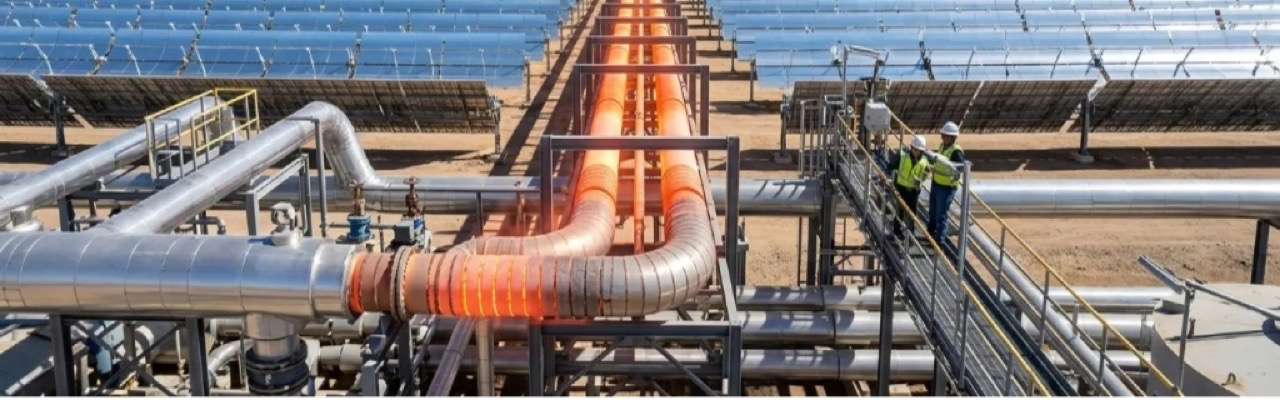
To make CSP plants more economically viable, minimizing capital costs is a priority. One major hurdle is finding ways to utilize less-expensive materials for the vast networks of solar field piping—rather than relying entirely on expensive, high-alloy materials. However, this is only possible if the heat transfer fluid can circulate at extreme temperatures with minimal corrosive effects on the infrastructure.
The Challenge of Chloride Molten Salts
Molten chloride salts are incredibly attractive for CSP applications because they can operate at temperatures exceeding 600°C. Pushing operating temperatures higher significantly increases the overall power generation efficiency of the plant. Unfortunately, these molten salts are substantially more corrosive to standard stainless steel than other types of traditional molten salts.
Dynalene’s presentation showcased the company’s rigorous analytical approach to solving this issue. Utilizing advanced techniques such as Scanning Electron Microscopy (SEM), Energy Dispersive Spectroscopy (EDS), and X-Ray Diffraction (XRD), the team studied the underlying corrosion mechanisms. More importantly, the research detailed Dynalene’s progress in developing specialized inhibitor packages for molten chloride salts, pushing the industry closer to safe, cost-effective, and highly efficient solar thermal power generation.
To learn more about this research, click here to read the full abstract and technical paper from CORROSION 2013.
- Follow Dynalene on LinkedIn for more updates.