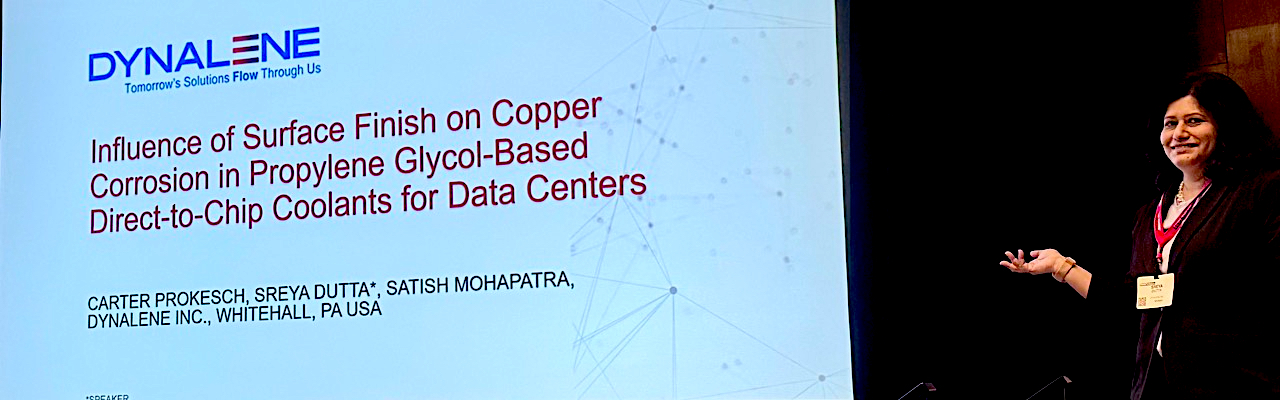
Dynalene Inc. recently presented research at the SEMI-THERM 42 Symposium—the 42nd Annual Semiconductor Thermal Measurement, Modeling & Management Symposium, held from March 9–12, 2026, at the DoubleTree Hotel in San Jose, California. As highlighted in a recent summary of the conference, the presentation delivered by Dr. Sreya Dutta addressed a critical challenge in modern data center thermal management: the influence of surface finish on copper corrosion in propylene glycol-based direct-to-chip (DTC) liquid cooling systems.
As data centers rapidly increase in power density to support advanced computing and AI workloads, direct-to-chip liquid cooling has become a necessity. However, copper cold plates—the standard for DTC cooling—are susceptible to corrosion. Passivation of the copper surface with azole is dependent on the surface finish and if the surface finish not optimized, corrosion products can clog the micro-channels, reduce cooling performance, shorten the lifetime of the hardware, and eventually cause catastrophic system failures.
Investigating Surface Roughness and Passivation
To address these challenges, Dynalene's R&D team (including Carter Prokesch, Dr. Sreya Dutta, and Dr. Satish Mohapatra) investigated the effect of the cold plate surface finish on the copper corrosion behavior and surface passivation by benzotriazole (BTA) in PG-25 direct-to-chip coolants.Through extensive electrochemical potentiodynamic studies, submerged corrosion tests and modified ASTM D4340 heat-rejecting tests, the team uncovered several critical insights
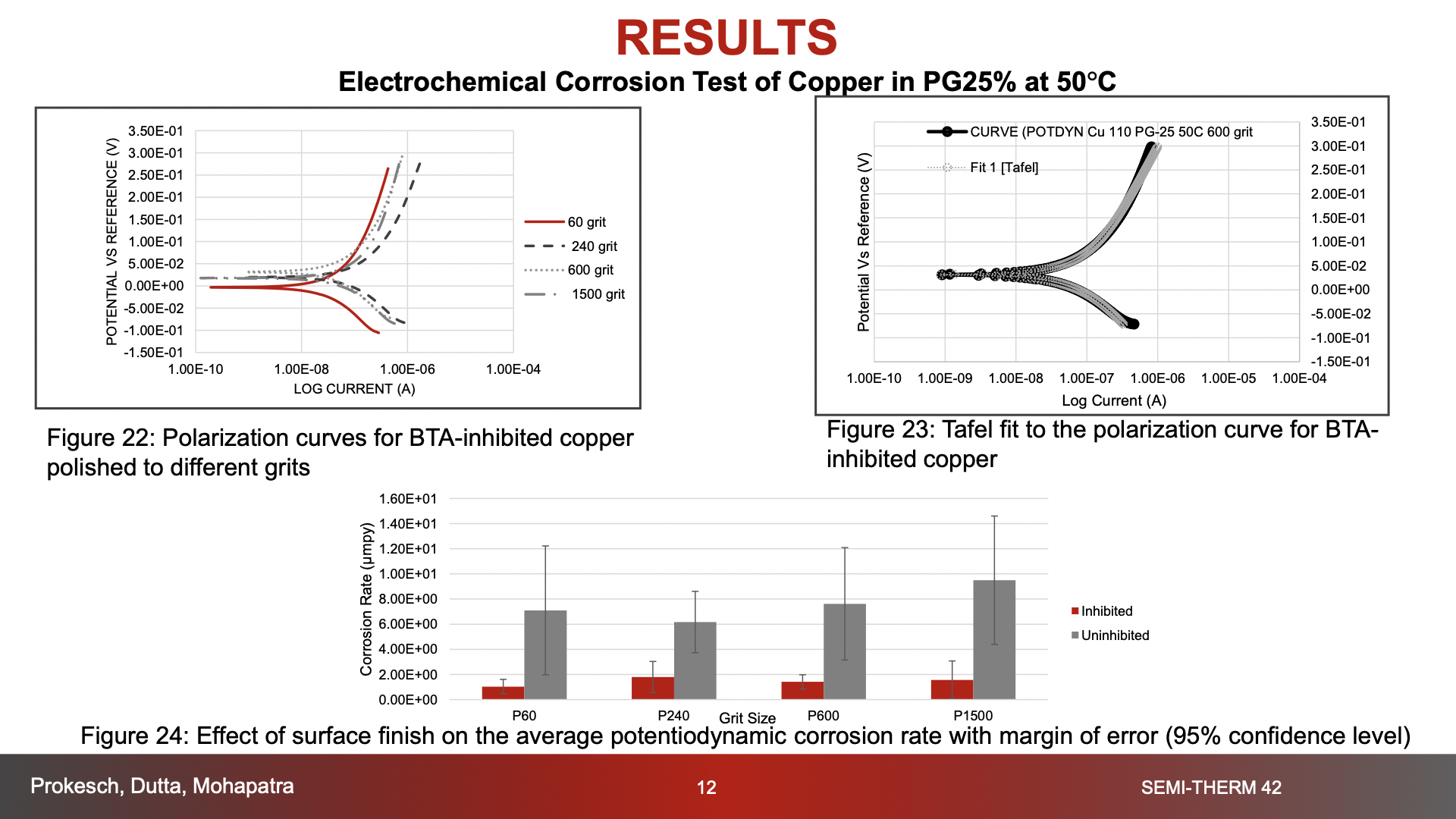
- A Key Conclusion: Electrochemical potentiodynamic studies showed that the inhibited coolant significantly improved corrosion resistance of the copper surfaces compared to the uninhibited coolant.
- Optimal Surface Finish: Heat rejecting copper plates showed the optimal formation of lamellar passivating layers (rich in protective nitrogen) when the surface roughness was between 600 and 1500 grit.
- Challenges of Very Smooth Surfaces: Smoother surface finishes (greater than 1500-grit) do not provide enough adhesion points for the corrosion inhibitor to effectively passivate and protect the copper.
- Risks of Rough Surfaces: Conversely, high surface roughness (lower grit values) poses uncertainty with inhibitor coverage, leading to inconsistent protection.
- Impact of Contaminants: The presence of contaminants, such as chloride poses challenges to the passivation of copper cold plate surfaces, directly interfering with the protective nitrogen coverage provided by inhibitors.
Effect of surface finish on potentiodynamic corrosion rates, showing optimal inhibition for 600–1500 grit copper.
Summary and Future Work
By understanding the optimal surface finish (600–1500 grit) for cold plate manufacturing in combination with appropriately inhibited coolants, facility operators and hardware developers can ensure more reliable, long-term operation of direct-to-chip liquid cooling loops.
Ongoing work at Dynalene continues to explore the effects of varying impurities on copper surfaces to further refine coolant formulations and fluid maintenance strategies.
Advanced Liquid Cooling Solutions
Dynalene utilizes high-quality USP-grade virgin propylene glycol to formulate PG-D25 coolant, featuring a proprietary additive package designed specifically for direct-to-chip cooling. It delivers exceptional multi-metal corrosion protection, particularly for the copper cold plates and heat exchangers utilized in most coolant distribution units (CDUs) and provides a robust defense against algae and bacteria growth. Dynalene PG-D25 coolant passes ASTM tests for heat transfer coolants (D8040), thermal stability (D7437), and coolant foaming (D1881). By implementing Dynalene’s advanced liquid cooling solutions, data centers can optimize their Power Usage Effectiveness (PUE) and increase overall rack density. Demonstrating high-volume capabilities, Dynalene has successfully delivered multiple large-scale global orders of up to a million gallons per project for various applications, including data centers.
To learn more about Dynalene Data Center Solutions, visit https://www.dynalene.com/data-centers/.